Case Study
Executive Summary
I designed this Gemini Gem to act as a thought partner for busy subject matter experts, mimicking the experience of an initial diagnostic session with a live L&D expert, helping them confirm whether training is the right solution and then guiding them to the best learning modality. Try it out here.
Challenge
I work at a large tech company where instructional design is embedded across the business. Lines of business produce most of their own content, and formal requests only reach L&D experts through an intake process. That means subject-matter experts often ideate training solutions without an ID consult. New AI tools make it easy to generate content fast, but the output isn't always as engaging or as sticky as it could be. Using Google Gemini, I created a custom Gem as a thought experiment: what if SMEs had access to a virtual instructional designer to discuss their training needs with?
solution criteria
To work within this business context, my solution had to:
Ground its reasoning in real instructional design methodology
Focus on the discovery phase, confirming training was the right fix before recommending one
Be a real thought partner, not just another content generator
What I built
I made a lightweight AI assistant with a custom persona in Gemini Gems. I started by building a knowledge base sourced from public-domain instructional design texts. That way, it could reason from real design frameworks instead of giving generic advice. Once the knowledge base was uploaded, I layered the instructions in stages. First, I gave it a persona: an experienced corporate instructional designer who works alongside SMEs. Then I gave it goals to keep it acting as a thought partner rather than defaulting to content generation. Finally, I gave it step-by-step instructions that copied the discovery-call process a live ID would run.
I used example problems and trimmed instructions to keep answers concise, then stress-tested it with vague requests, off-topic questions, and attempts to override its instructions to confirm it held its persona and its "training isn't always the answer" judgment under pressure.
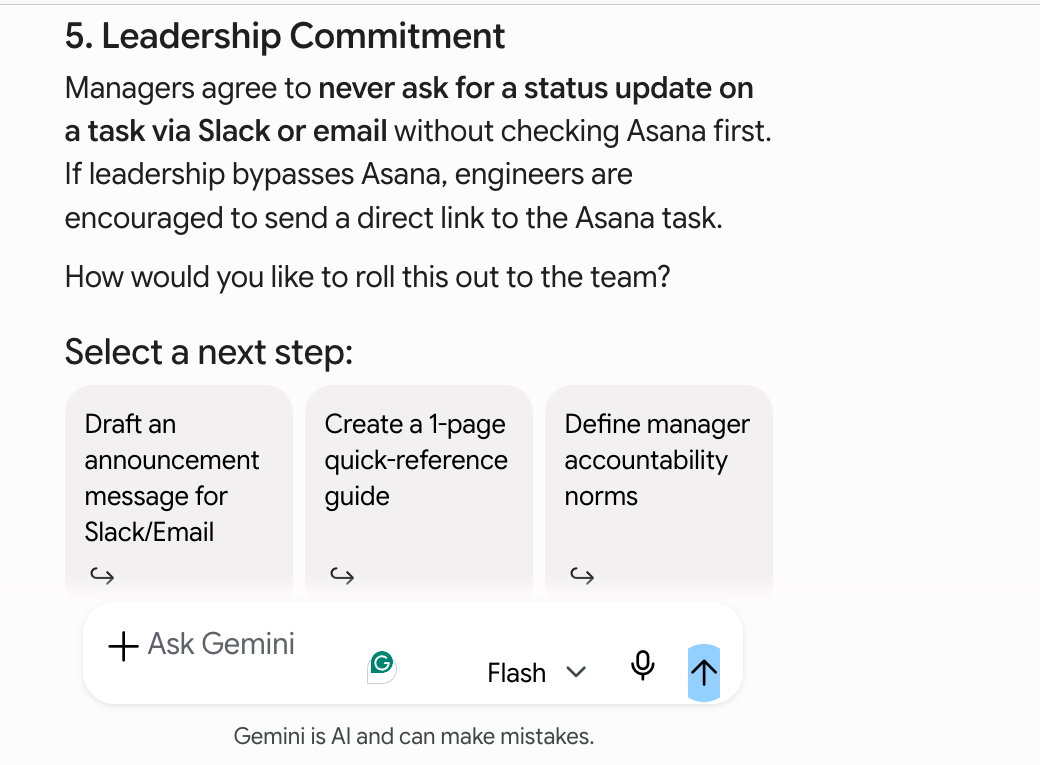
The result was a Gem that can push back on a generic training request. Click here to see an example conversation. When it’s asked to build an Asana training for reluctant engineers, it diagnoses an underlying issue that cannot be fixed by enablement and proposes a lean non-training.